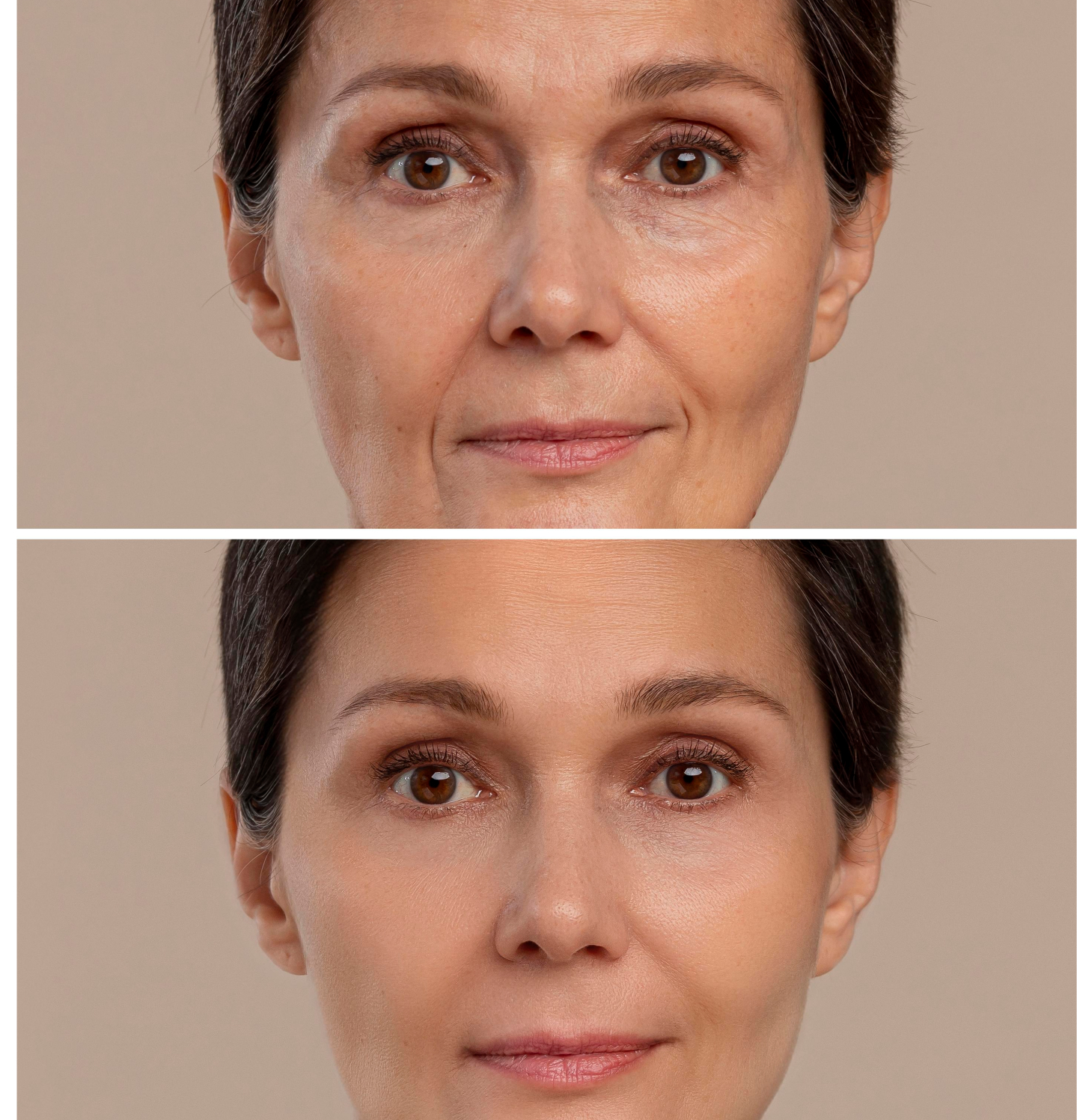
Mid Face and Brow Lift
The so-called mid-face area includes the cheeks and cheekbones.

Mid Face and Brow Lift Surgery
The area called the mid-face includes the cheeks and cheekbones. In the periods after the forties, the cheeks sag downward with the effects of gravity and aging. Over time, this sagging can become so pronounced that it reveals the cheekbones and these sagging tissues create a fullness at the level of the mouth.

Surgery
In the surgery, the sagging tissues are lifted upwards and the fullness on the cheekbones is restored. Thus, the expansion on the lower side is reduced and the face form changes.

Since the cuts are made only inside the mouth, where your upper lip ends and inside your scalp, there is no scar. With the camera and special tools, muscles, fat packets and membranes are prepared one by one and moved upwards.

Who is suitable for this surgery
Under normal conditions, it is ideal for your cheekbones to be high and your cheeks to be as far inside as possible at the mouth level. If these proportions are reversed, that is, if your cheeks are protruding but your cheekbones are flattened, this surgery may be suitable for you.

This is not necessarily an operation performed in old age. A significant number of patients who have this surgery have congenital sagging cheeks.

After Surgery
The first change you will see on your face after this surgery will be swelling. For the first few days you will lie with your head upright and apply plenty of ice. Return to work is usually possible at the end of the first week. The cheekbones look swollen for the first few weeks. Usually in the second, third week you will breathe a sigh of relief seeing that the edema has resolved.

Complications
Small blood accumulations (hematoma) that may occur after this surgery will not cause a serious problem.

Infection is one of the complications that can be seen after this surgery. Since most of the surgery is performed through the mouth, there is always the possibility of getting infected from here, but if such infections are treated correctly, they heal quickly.

Asymmetry: In this surgery, one of the sutures that hang the tissues may cause asymmetry. In this case, this stitch may need to be placed again.

Temporary loss of sensation is also an expected problem after this surgery. Loss of sensation in the upper lip and forehead will usually disappear after a few weeks. Losses lasting for months can rarely be encountered.

Temporary hair loss may also be rare. However, hair and sensation will definitely come back.

Summary of Surgery

  • Type of anesthesia General.
  • Where the surgery should be performed: In a hospital operating room that has the infrastructure for this surgery.
  • Duration of surgery: 1.5-4 hours.
  • Length of hospitalization: Can be discharged on the same day.
  • Postoperative pain - discomfort: Mild pain for 2-3 days. Simple oral painkillers are sufficient.
  • Swelling, bruising: Between 3-6 days, moderate.
  • Dressing: It is completely removed in 2 days. Drains, if any, are removed the next day.
  • Stitches: No stitches to be removed in the mouth, other areas on the 7th day
  • When you can return to work: 7 days.
  • Sports: Long walks after 2 weeks, heavy sports can be started after 3 weeks.
  • Final shape: 3 months


Online Appointment
Op. Dr. Serhat Tuncer
It can respond in about 1 hour.
Op. Dr. Serhat Tuncer
Hello, how can I help you?
13:53